
Start with the job: eaten now, toasted, carried to work, packed for school or served to a group. That decision changes the bread, moisture and assembly order.
1. Plan the bite before buying ingredients
Choose a main direction—deli-sharp, warm and cheesy, fresh and herb-forward, spicy, smoky or vegetable-led. A sandwich becomes muddy when every ingredient tries to be the loudest. One rich component, one acidic component and one crisp or chewy contrast is a dependable starting point.
2. Match and prepare the bread
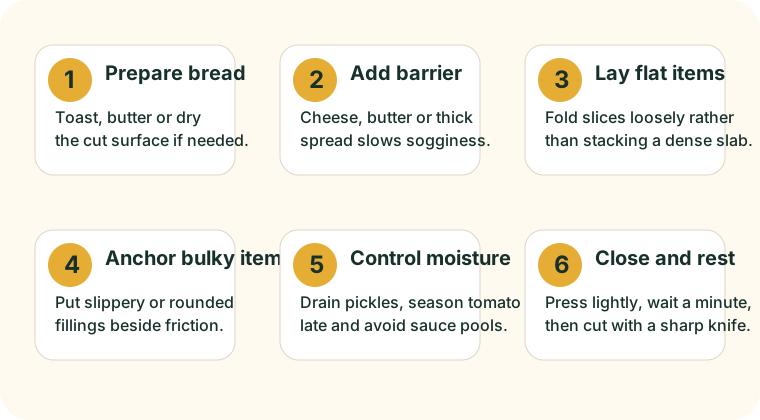
Soft sandwich bread suits flat, modest fillings. Ciabatta, baguette and substantial rolls handle heavier or wetter stacks but can be difficult to bite if the crust is very hard. Toasting adds strength and aroma; it also creates sharp edges and may make a packed sandwich tough after cooling. For a sandwich that will sit, use a thin barrier of butter, cheese, mayonnaise or another thick spread on the cut surfaces.
3. Season the parts, not just the sauce
Taste the main filling. Deli meat and cheese may already be salty, while roasted vegetables, eggs, beans or chicken salad may need more seasoning. Tomato benefits from last-minute salt; lettuce often benefits from a small amount of vinegar. Acidity can come from mustard, pickles, pepper brine, citrus or a dressed vegetable—not necessarily from more sauce.
4. Layer for stability
Place flat, grippy ingredients near the bread. Fold thin slices instead of compressing them into a dense slab. Keep round tomato slices between ingredients that create friction. Drain pickles and roasted peppers. Put shredded lettuce in a thin, even layer so it adds texture without forming a sliding mat.
5. Close, rest and cut
Press lightly with your palm, wait 30 to 60 seconds and cut with a sharp serrated knife. That brief rest lets spreads adhere and loose fillings settle. Wrap tightly only when transport requires it; heavy compression can squeeze out wet ingredients and turn a delicate sandwich into a brick.
A simple troubleshooting guide
| Problem | Likely cause | Next change |
|---|---|---|
| Soggy bottom | Wet filling touching bread too early | Add a barrier; drain filling; assemble later |
| Filling slides out | Too many smooth layers together | Add friction; slice thinner; lower the stack |
| Tastes flat | Salt or acid is missing | Season the filling; add pickle, mustard or vinegar |
| Hard to bite | Crust or filling pieces are too tough | Choose softer bread; slice meat and vegetables thinner |
| Too rich | Cheese, mayo and fatty filling lack contrast | Add bitter greens, pickles, mustard or dressed cabbage |